
When an old dog starts slipping on hardwood floors, it’s often more than a traction problem.
What looks like clumsiness is frequently a sign of physical weakness, joint pain, or neurological changes that come with aging.
Table of Contents
Old Dog Slipping on Hardwood Floors: Why It Happens
An old dog slipping on hardwood floors usually means their body can no longer stabilize itself the way it used to.
Aging affects muscle strength, joint flexibility, nerve signaling, and balance, all of which are essential for grip and coordination.
Smooth surfaces expose these weaknesses more than carpet or grass. While flooring plays a role, the real issue is often an underlying age-related condition that deserves attention.
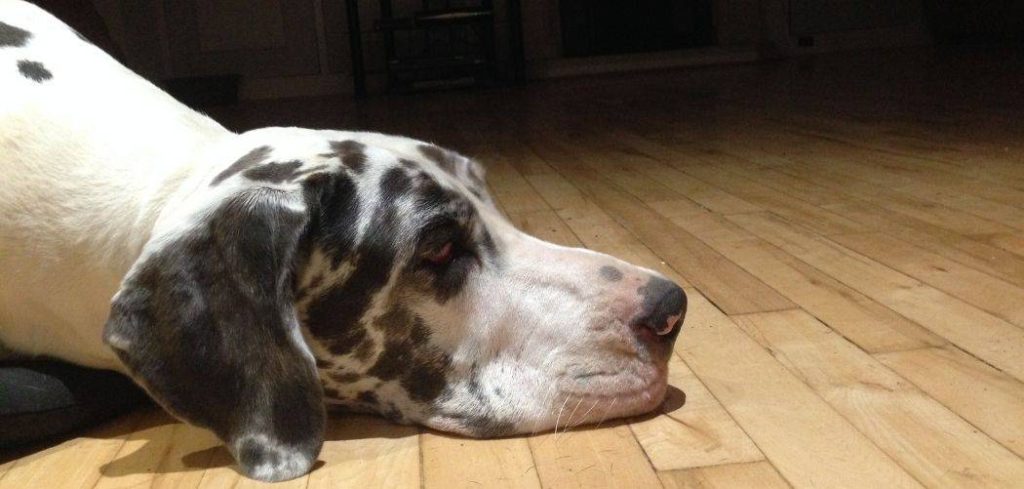
Old Dog Slipping on Hardwood Floors: Symptoms
Slipping on hardwood floors is common in older dogs and often points to reduced strength, joint issues, or declining coordination. Signs include:
Slipping or sliding when walking or turning
Difficulty standing up on smooth surfaces
Hesitation or fear of walking on hardwood floors
Weakness or shakiness in the legs
Splaying of the legs, especially the back legs
Occasional falls or loss of balance
Old Dog Slipping on Hardwood Floors: Common Causes
Muscle Loss and Weakness
Muscle mass naturally declines in senior dogs. As strength decreases, especially in the hind legs, dogs struggle to push off slick surfaces.
Hardwood floors offer no resistance, making weakness far more noticeable indoors.
This often starts subtly and worsens over time, even if your dog seems fine outside.
Read more: Old Dog Back Legs Collapsing (When to worry)
Arthritis
Joint pain affects balance and confidence. The American College of Veterinary Surgeons (ACVS) explains that osteoarthritis reduces joint function and often leads to stiffness, slipping, difficulty standing, and reluctance to exercise.
When joints hurt, dogs hesitate to bear weight properly, increasing the risk of slipping.
Hard floors magnify this problem by requiring stronger joint control with less traction.
Read more: Old Dog Legs Splayed Out (What it means)
Reduced Paw Grip and Nail Changes
Aging paws lose traction. Senior dogs often develop dry paw pads, overgrown nails, or changes in toe alignment.
Long nails reduce surface contact, while dry pads grip poorly on smooth flooring. Even mild paw changes can significantly affect stability on hardwood.
Neurological Changes
Nerve signaling weakens with age. Conditions affecting the spinal cord or peripheral nerves reduce coordination and awareness of foot placement.
Dogs may not realize their paws are slipping until they lose balance. This often appears first on slick surfaces where precision matters most.
Balance Disorders
Balance problems increase slipping risk. Age-related vestibular changes affect spatial awareness and equilibrium.
Dogs may sway, stumble, or struggle to correct their posture quickly enough on smooth floors. Slipping indoors is often one of the earliest signs owners notice.
Fear and Loss of Confidence After Falls
One slip can change behavior. After falling, some senior dogs become anxious on hardwood floors.
Fear causes tense movements and poor posture, which actually makes slipping more likely. This emotional component often worsens the physical problem.
Reduced Vision
Vision loss affects foot placement. Older dogs may not clearly see floor edges or reflections on shiny surfaces.
Misjudging where to step increases the chance of slipping, especially when turning or stopping. Vision decline often combines with other mobility issues.
What to Do
Create safe walking paths using rugs, runners, or non-slip mats in high-traffic areas.
Keep your dog’s nails trimmed and paw pads moisturized to improve traction. Encourage slow, controlled movement indoors rather than rushing or jumping.
Provide supportive bedding and avoid forcing your dog to navigate slippery areas unnecessarily.
In addition to treating the underlying cause of your dog’s mobility problems, a few simple products can make moving around the house much safer.
Paw grips can improve traction on slippery hardwood floors, while a rear support harness provides extra stability for dogs that need help getting up or walking. If your dog spends a lot of time resting, an orthopedic bed can also provide additional support for aging joints.
Learn more in our guides to the Best Paw Grips for Senior Dogs, Best Dog Harnesses for Weak Back Legs, and Best Orthopedic Beds for Senior Dogs.
For more mobility solutions, explore our Senior Dog Products hub.
When to Call or Visit Your Vet
Schedule a veterinary visit if slipping appears suddenly or worsens quickly.
Seek evaluation if slipping is paired with weakness, pain, shaking, or changes in posture.
Immediate attention is needed if your dog falls frequently, struggles to stand, or shows signs of neurological decline.
Old Dog Slipping on Hardwood Floors: Treatment
Veterinary treatment focuses on identifying and managing the underlying cause of mobility loss. If arthritis or joint pain is present, your vet may prescribe anti-inflammatory medications, pain relief, and joint-support supplements.
In cases of muscle weakness or neurological decline, additional diagnostics may be needed, and treatment may include supportive therapies or medications. Weight management and controlled exercise are often recommended to maintain strength and stability.
At home, improving traction with rugs, non-slip mats, or paw grips, along with providing supportive bedding, can significantly reduce slipping and help your dog move more confidently.
Key Takeaway
Slipping on hardwood floors in an old dog is rarely just a flooring issue. It’s often an early sign of muscle loss, arthritis, nerve changes, or balance problems that come with aging.
Addressing the underlying cause while making your home safer can dramatically improve confidence and mobility.
Early intervention helps prevent falls, injuries, and loss of independence, allowing your dog to move more comfortably through their senior years.


